AI Agents Are Eating Software - Here's What That Means for Your Career
 Adam Neon
Marc Andreessen said software was eating the world. That was 2011. He was right. Every industry became a software industry.
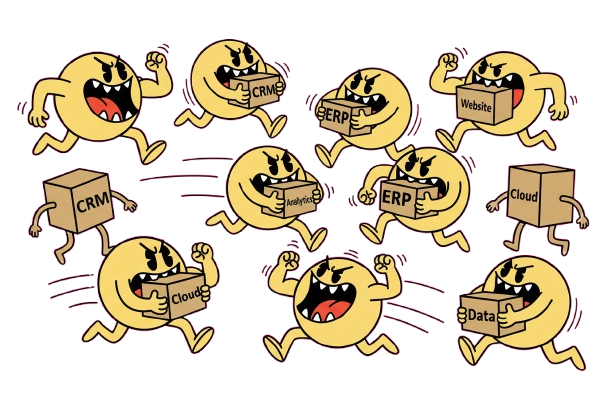
Now software itself is getting eaten. Not by another technology. By agents.
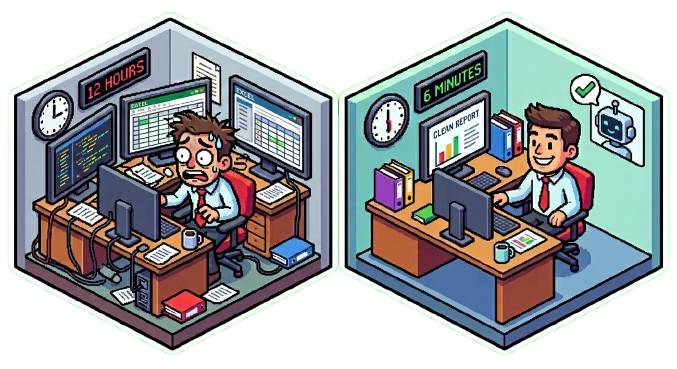
I watched this happen in real time last month. A friend of mine runs a small logistics company. Fifteen staff. Good business. His operations manager spends about 12 hours a week pulling data from three different systems, cross-referencing it in Excel, and producing a weekly dispatch report. It’s tedious work. She’s good at it, but she’s been doing it for two years and she’s bored out of her mind.
He set up an agent last week. Pointed it at the three systems. Told it what the report should look like, gave it a few examples of edge cases, and set a human review step before anything gets sent. Total setup time: four hours. The agent now produces the report in about six minutes. She reviews it. Hits send.
Twelve hours a week. Gone.
That’s not “AI will replace everyone.” That’s one specific task that used to require a human, now handled by software that reasons. And this pattern is spreading fast. Not to whole jobs - not yet - but to individual tasks. Task by task, workflow by workflow, the things we used to do manually are getting absorbed.
What “Agents Eating Software” Actually Looks Like
Three years ago, if you wanted to automate something, you wrote code. A script that called APIs. A Zapier workflow with clearly defined steps. A cron job that ran on schedule. You were the orchestrator. Every step had to be defined, tested, and maintained.
Agents flip this. You describe the outcome. The agent figures out the steps.
I need a weekly report showing which shipments were delayed by more than 24 hours, why, and what it cost us. Pull the data from the TMS, the carrier portal, and the accounting system. Flag anything above $5,000. Draft an email to the affected clients.
The agent picks its own tools. It handles edge cases. It asks for clarification when it’s stuck. It doesn’t need every branch of the decision tree defined upfront. It reasons.
What used to take a developer a day now takes an agent five minutes - and the person configuring it doesn’t need to write a line of code.
The Career Impact (It’s Not What You Think)
The obvious fear is “agents will take my job.” The less obvious reality is that agents will split people into two groups: those who tell agents what to do, and those who get told what to do by agents.
Here’s who thrives:
People who design workflows, not just execute them. The skill isn’t writing the automation code anymore. It’s understanding a business process deeply enough to describe it to an agent, predict where the agent will fail, and build in the right checkpoints. This is systems thinking. Not memorising syntax.
People who evaluate agent output with real judgment. Agents are confidently wrong often enough to be dangerous. I’ve watched an agent produce a “complete” financial analysis that looked perfect - formatting, charts, executive summary - and had a $40,000 error buried in row 47. A junior person who copy-pastes that is a liability. A senior operator who catches it in 30 seconds is worth their weight.
People who orchestrate multiple agents at once. The real leverage comes from running agents in parallel. One researches competitors. Another drafts the proposal. A third checks for errors and inconsistencies. The human sets the strategy, reviews the combined output, makes the final call. This role doesn’t have a title yet. But it will.
People who build the templates and guardrails. For every company deploying agents, someone needs to build the prompt templates, the tool integrations, the safety checks, the monitoring dashboards. That someone is getting paid well. The agents are the assembly line. The templates are the factory design.

What Stops Being Valuable
Writing boilerplate code. Agents already do this faster and with fewer bugs. If your main value is “I can build a CRUD app in a weekend,” you’re competing with a tool that does it in 30 seconds. That’s not a fight you win.
Manual research and data entry. Agents browse, scrape, extract, and summarise better than humans for structured tasks. The human edge isn’t in doing the clicking and copying. It’s in knowing what to research in the first place.
Simple API integrations. MCP is making these plug-and-play. The days of reading a REST API doc and writing a Python wrapper as a billable skill are numbered. The agent can handle that. The value is knowing which APIs to connect and why connecting them matters for the business.
What Becomes More Valuable
Domain expertise. The agent knows how to use tools. It doesn’t know your industry’s regulations, your customers’ psychology, or your competitors’ blind spots. Someone who understands healthcare compliance and can direct an agent to build compliant workflows is worth 10x a generic developer who can do neither.
Taste. Agents generate. Humans curate. Knowing which of the agent’s 10 suggestions is actually good - that’s taste. Taste comes from experience. Experience can’t be automated. (Yet.)
Prompt architecture. Not “prompt engineering” in the “write a clever instruction” sense. I mean designing multi-agent systems with feedback loops, verification steps, and escalation paths. This is software architecture for a new paradigm. The people good at it right now aren’t advertising. They’re busy.
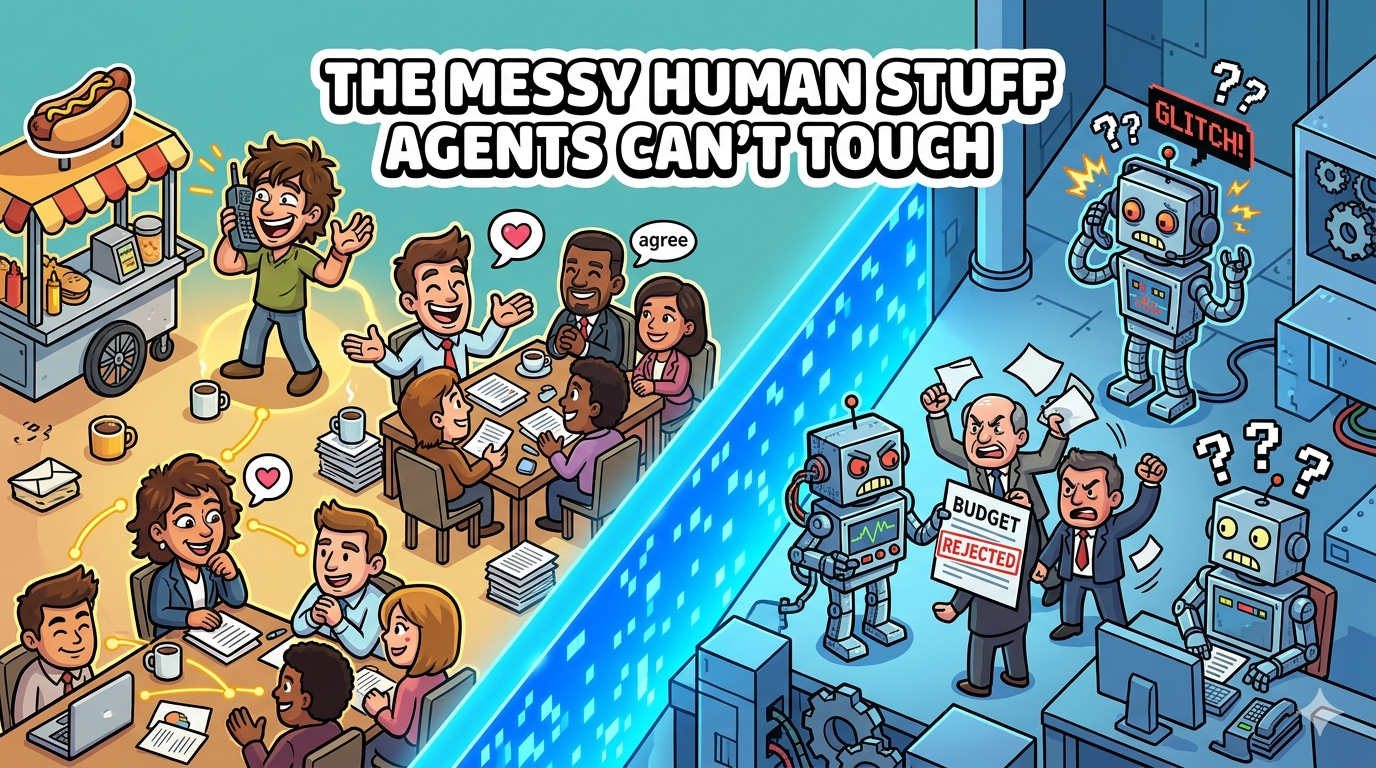
The messy human stuff agents can’t touch. Calling a vendor when the API is down. Persuading a stakeholder to approve a budget. Reading the room in a client meeting and adjusting the approach in real time. The soft stuff. The relationship stuff. That’s the moat and it’s getting wider.
What I’d Actually Do
If you’re reading this and wondering where to start:
Pick one repetitive task you do every week. Not the hardest one. The most boring one. Set up an agent to handle it. Watch where it fails. The failures will teach you more about how agents actually work than any course or article. Build one thing. Use it for a month. Then build the next thing.
Learn MCP. It’s the protocol agents use to connect to tools. Understanding it means you can build integrations once and use them with any agent. That’s leverage. Real, compounding leverage.
Get good at evaluation. Learn to spot agent hallucinations fast. Build your own checklist for verifying output. The human-in-the-loop role isn’t going away. It’s becoming the most valuable role in the room.
Pick a domain. “AI consultant” is generic and the market is flooding with them. “AI workflow specialist for allied health practices” is specific and memorable and you can actually charge for it. The agents handle the generic work. You handle the domain-specific thinking.
Build templates, not just projects. Every agent workflow you build for yourself is a potential product. Package it. The market for “here’s a pre-built agent that does this specific thing for your industry” is enormous and mostly empty.
Agents aren’t coming. They’re here. The question isn’t whether they’ll change how you work. It’s whether you’ll be the one directing them, or the one being replaced by someone who figured it out six months before you did.
So - what’s the first boring, repetitive task you’re going to hand off this week?