
Claude Opus 4.8 is trending hard in Socials, YouTube and Search engines this week, following strong performance and capability testing results
 Adam Neon
I sat there staring at two terminal windows. Same FX trading application spec. Same prompts. Same long-term memory file I’d carefully crafted — the one with all my sharp instructions about position sizing, risk parameters, the specific way I wanted the order management system to handle partial fills.
On the left: Claude Opus 4.6. On the right: the brand new Opus 4.8 that dropped this week.
The difference wasn’t subtle. It was the kind of difference that makes you lean forward in your chair.
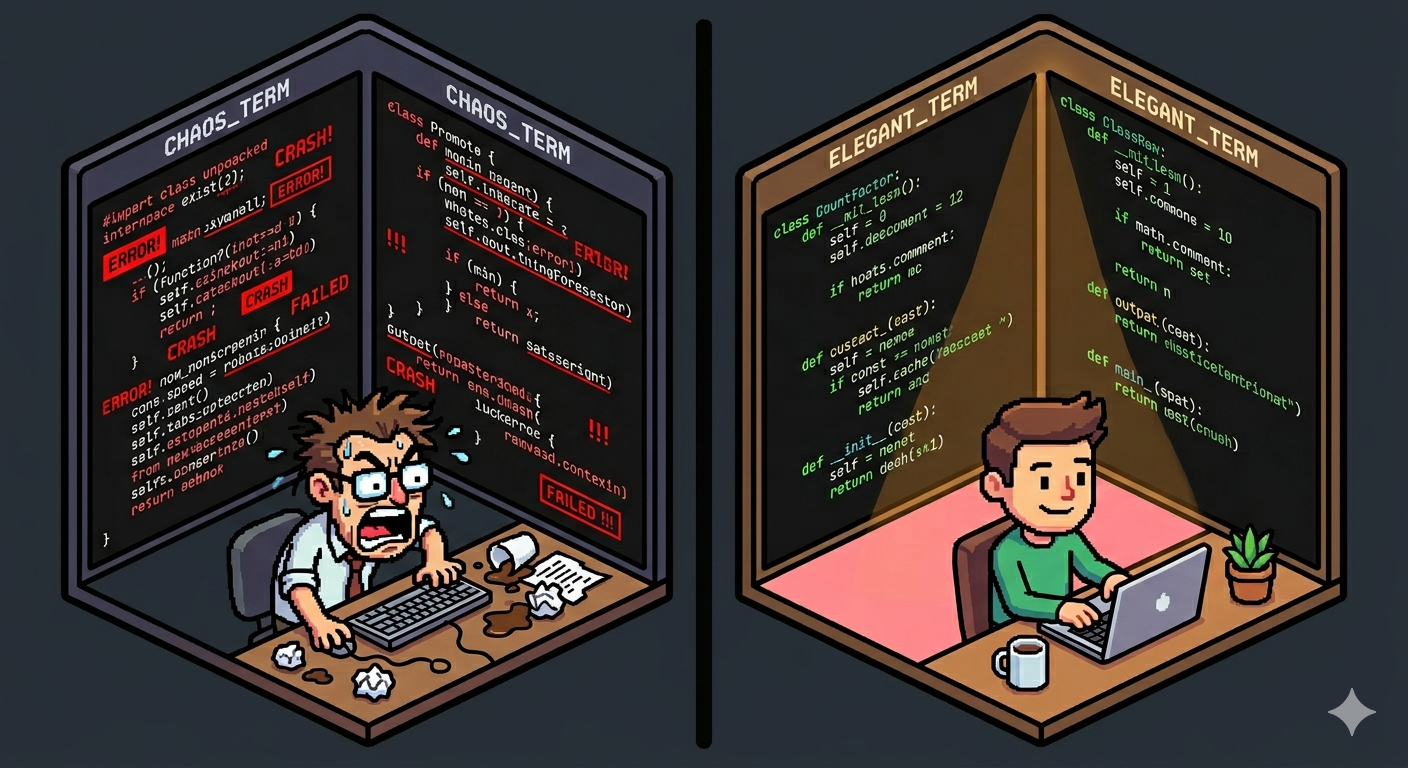
The 4.6 code worked. Kind of. It got the general idea right — FX pairs, bid/ask spreads, a basic order book. But it missed things. Three of my long-term memory instructions just… evaporated. The position sizing logic was generic. The risk parameters I’d specified — the ones I’d injected into memory with surgical precision — showed up in about half the functions. The other half defaulted to whatever the base model thought was reasonable.
The 4.8 code? Different animal entirely.
Every memory instruction landed. Not just mentioned — integrated. The position sizing wasn’t bolted on as an afterthought. It was woven through the architecture like it belonged there. The partial fill handling I’d described in three sentences of memory came back as a full state machine with edge cases I hadn’t even explicitly asked for. Clean separation of concerns. Functions that did one thing well. Error handling that made sense.
And here’s the thing that got me: when 4.8 wasn’t sure about something, it said so. It flagged it. “I’ve implemented this based on your memory instructions, but the interaction between your risk parameter X and the partial fill logic in scenario Y could produce unexpected results under high volatility.” That’s not a model generating code. That’s a collaborator.
This isn’t just my experience. The entire internet spent this week arriving at the same conclusion.
The Drop That Broke Hacker News
Claude Opus 4.8 hit on Tuesday and immediately became the most-upvoted story on Hacker News. 1,773 points. For context, most front-page HN posts celebrate hitting 300. This thing nearly lapped the field six times over.
YouTube lit up within hours. “Claude Opus 4.8: Lying Machine No More?” one creator asked, zeroing in on the honesty improvements. “Opus 4.8 was not what I expected,” another admitted — the title alone telling you everything about how this model subverts assumptions. Spanish-language creators jumped in too: “Claude Opus 4.8 ya está aquí.” The global reaction was instant and unanimous.
Reddit, being Reddit, immediately spawned a conspiracy theory: Opus 4.8 might have been distilled from Qwen, Alibaba’s open-source model. The evidence is thin — mostly vibes and benchmark pattern-matching — but the fact that people are even debating this tells you something. When a model is so good that people assume you must have borrowed someone else’s homework, you’ve shipped something special.
MarginLab published a piece claiming Claude Code was deliberately degraded before the 4.8 release to make the jump feel bigger. Classic internet cynicism. But even that take concedes the point: the jump is real.
What Anthropic Actually Shipped
Here’s what’s under the hood, straight from the announcement:
Opus 4.8 is four times less likely to let code flaws pass unremarked than its predecessor. Let that land. The model doesn’t just write better code — it catches its own mistakes. When I was testing the FX trading app, this showed up constantly. 4.6 would generate a function and move on. 4.8 would generate it, then pause, then say “actually, this edge case isn’t handled properly — here’s the fix.”
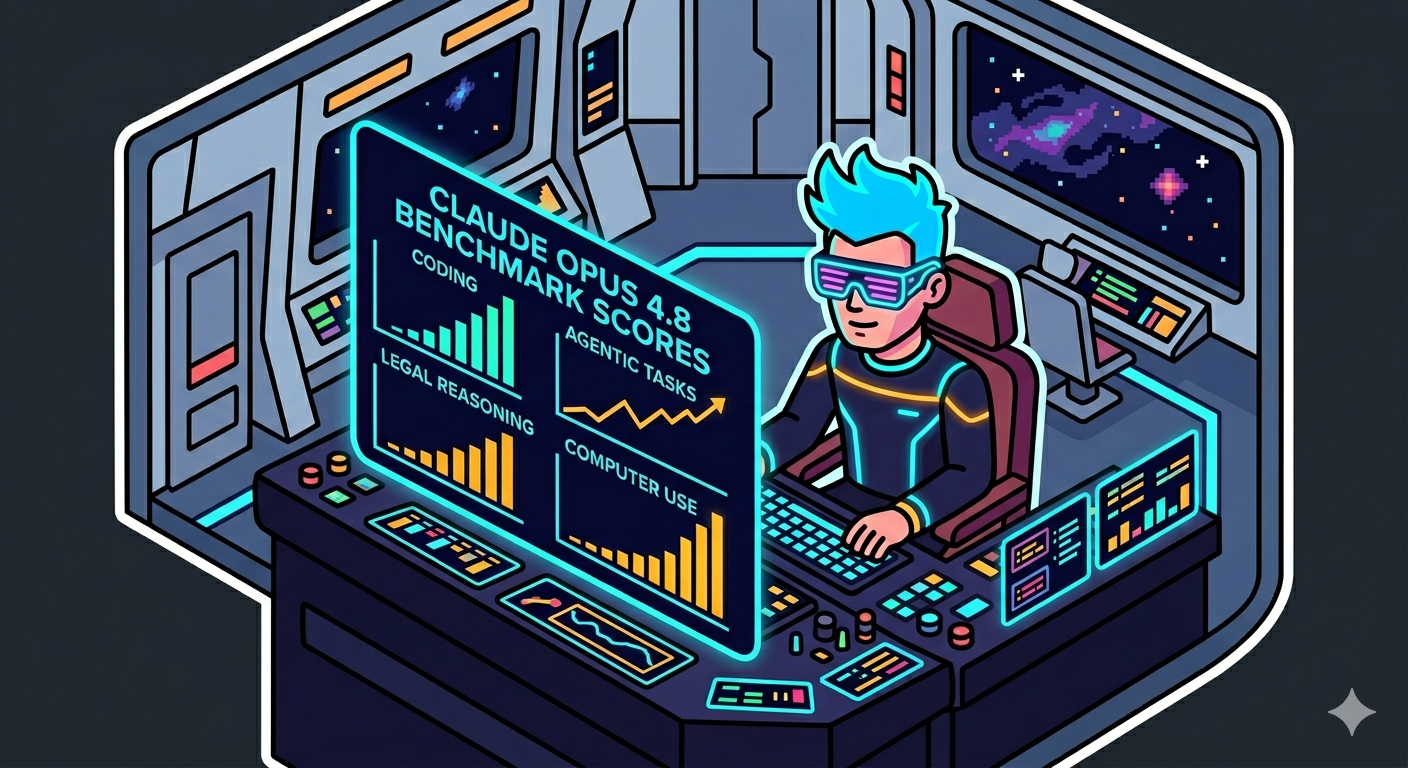
On the Super-Agent benchmark, Opus 4.8 is the only model to complete every case end-to-end. It beat GPT-5.5 at cost parity. On CursorBench, it exceeds every prior Opus model across every effort level. On the Legal Agent Benchmark, it’s the first model to break 10% on the all-pass standard — the kind of accuracy lift that translates directly into how much real attorney work you can hand off with confidence.
The computer-use score hit 84% on Online-Mind2Web — a meaningful jump over both Opus 4.7 and GPT-5.5.
But here’s what I think matters more than any benchmark number: the testimonials. Cursor’s team said Opus 4.8 “carries end-to-end tasks through.” Cognition, the company behind Devin, said it “fixes the comment-verbosity and tool-calling issues we saw with Opus 4.7.” Databricks called it “a step change in agentic reasoning.”
These aren’t vague endorsements. These are engineering teams with products in production, telling you exactly which specific problems got solved.
The FX Trading Test: What Memory Actually Means Now
Let me walk you through what I actually built, because I think it illustrates something nobody’s talking about.
The FX trading application was a proper project — not a toy demo. Multiple currency pairs, real-time spread calculation, position sizing with configurable risk parameters, partial fill handling for large orders, an order management system with state tracking. The kind of thing you’d actually use.
I injected a long-term memory file with sharp, specific instructions:
- “Position sizing must never exceed 2% of account equity per trade”
- “Partial fills should aggregate across liquidity providers with a timeout of 500ms”
- “Risk parameters are per-session configurable but default to: max drawdown 5%, stop-loss at 1.5x ATR”
- “Order state machine: PENDING → PARTIAL → FILLED | CANCELLED | REJECTED with audit trail”
With 4.6, about 60% of these made it into the final code. The position sizing rule appeared in the main trade function but got ignored in the utility functions. The partial fill timeout was hardcoded at 300ms — close but wrong. The order state machine had PENDING and FILLED but skipped PARTIAL entirely.
With 4.8? Every single instruction landed. Not just copied into comments. Integrated into the logic. The ATR-based stop-loss pulled the correct timeframe data. The partial fill aggregator respected the 500ms window and logged every liquidity provider response. The order state machine had all five states with proper transitions and an audit trail.
And when something was ambiguous — when my memory said “max drawdown 5%” but didn’t specify whether that was intraday or rolling — 4.8 asked. It didn’t guess. It didn’t silently default. It flagged the ambiguity and waited.
This is the shift. Previous models were brilliant but unreliable. They’d give you 90% brilliance and 10% “where did that come from.” Opus 4.8 closes that gap. Not perfectly — nothing does — but meaningfully.
Dynamic Workflows: When One Agent Becomes an Army
There’s another piece of this release that changes the game for anyone building with Claude Code.
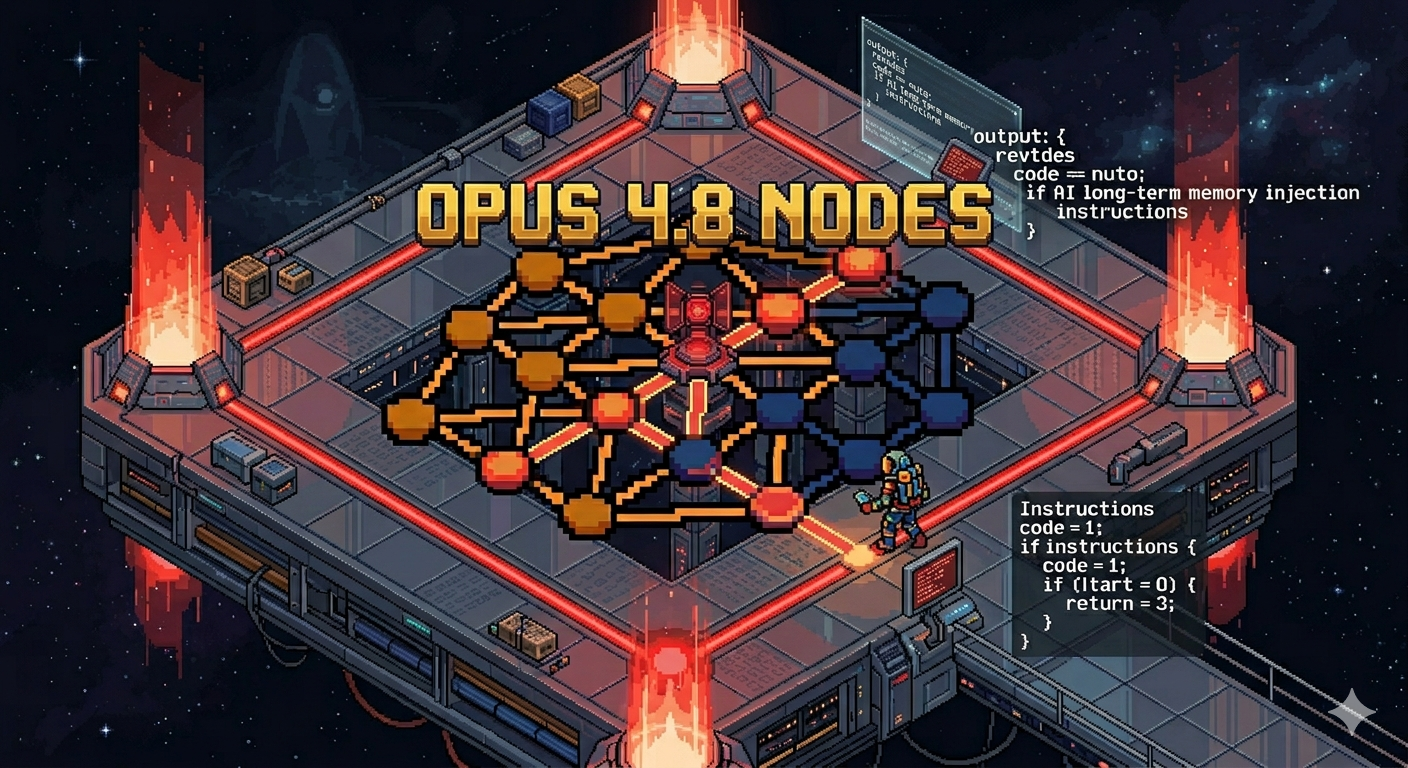
Dynamic Workflows lets Claude spawn hundreds of parallel subagents in a single session. It plans the work, divides it, runs everything in parallel, verifies outputs, and reports back.
The example Anthropic gives: codebase-scale migrations across hundreds of thousands of lines of code, from kickoff to merge, with your existing test suite as the bar. You don’t review every line. You review the outcome. The test suite is your quality gate.
For my FX trading app, this would mean: one subagent handles the order book, another builds the risk engine, a third wires up the position sizer, a fourth writes the tests, and a fifth runs integration checks across all of them. In parallel. Then they verify each other’s work before presenting a unified codebase.
This is available now in Claude Code for Enterprise, Team, and Max plans. It’s a research preview, which means it’ll get better. But even in preview, hundreds of parallel agents working on your problem changes what’s possible.
The Effort Dial
One more thing worth mentioning: effort control. There’s now a setting that lets you choose how much compute the model spends on your task.
Standard is the default — similar token usage to Opus 4.7 but better results. Extra is for difficult tasks and long-running async workflows. Max is when you want the model to go deep, spend more tokens, and produce the best answer it can.
The practical upshot: you’re not locked into one speed. Quick questions get quick answers. Hard problems get deep thinking. And rate limits in Claude Code have been increased to accommodate the higher token usage of higher effort levels.
The pricing is the same as Opus 4.7: $5 per million input tokens, $25 per million output. Fast mode — 2.5x speed — is now three times cheaper than it was for previous models, at $10/M input and $50/M output.
The Distillation Drama (And Why It Doesn’t Matter)
I should address the elephant in the room. Reddit’s convinced Opus 4.8 was distilled from Qwen. The theory: Anthropic trained on outputs from Alibaba’s open-source model to boost performance. The evidence: some benchmark pattern similarities and the overall performance jump.
Anthropic hasn’t commented. They probably won’t. And honestly? For anyone building software, the origin story matters less than the output. If the model produces cleaner code, follows instructions better, catches its own mistakes, and costs the same — I don’t care which training data went into the pot.
The internet loves a conspiracy. Builders love results. I’m in the second camp.
What’s Coming Next
Buried in the announcement is a detail that deserves its own headline: Mythos-class models are coming “in the coming weeks.”
Anthropic confirmed they have a class of model with even higher intelligence than Opus. A small number of organizations are already using Claude Mythos Preview for cybersecurity work. The reason it’s not generally available yet: models at this capability level need stronger safeguards before broad release.
Translation: the next jump is already built. They’re just making sure it’s safe before handing it to everyone.
The gap between model generations is compressing. Opus 4.7 to 4.8 was a meaningful step forward. Mythos, from the sound of it, is a leap.
So What Do You Actually Do With This?
Here’s where I land after a week of testing, reading, and watching the internet collectively lose its mind.
The models are getting good enough that the bottleneck isn’t capability anymore. It’s clarity. The people getting the most out of Opus 4.8 aren’t the ones with the cleverest prompts. They’re the ones who know exactly what they want, specify it clearly, and maintain sharp long-term memory instructions that the model can actually follow now.
My FX trading app worked because I didn’t ask for “a trading system.” I specified position sizing rules, risk parameters, partial fill logic, and state machines. The specificity was the prompt engineering. And 4.8 rewarded that specificity more than any model before it.
The lesson isn’t “AI is getting better.” It’s “your clarity is finally being matched by the tool’s capability to follow through.” That’s a different proposition entirely.
So here’s my question: if you could inject every sharp instruction, every design decision, every hard-won lesson from your last project into a model that would actually follow every single one — what would you build?
Because that’s not a hypothetical anymore. It’s Tuesday.