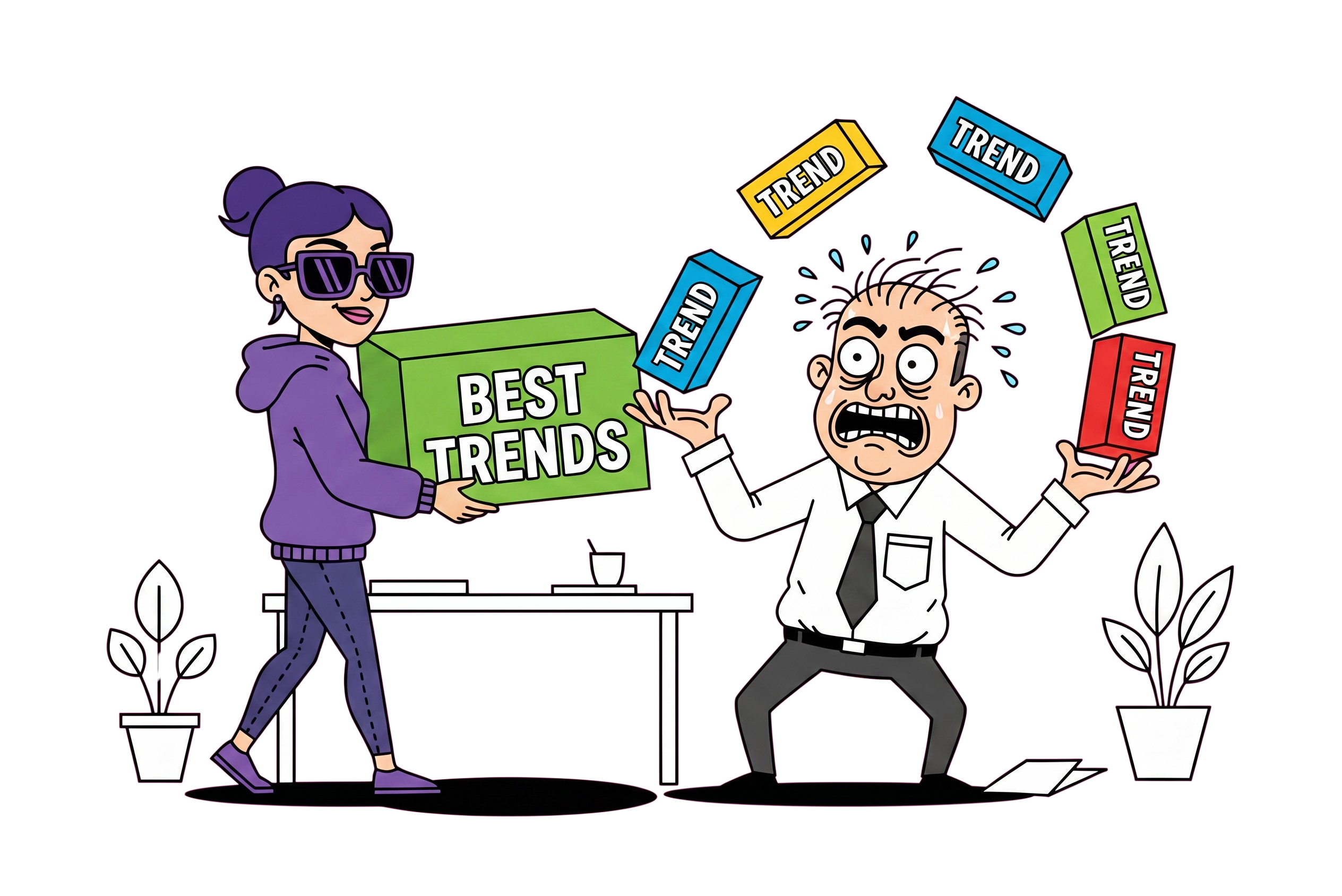
The 6 AI Trends That Actually Matter in 2026 - ignore the rest
 Adam Neon
It’s Tuesday morning. You open Twitter. Someone just raised $200 million for “agentic workflow orchestration.” Someone else is arguing about whether GPT-5 is conscious. A third person is announcing they’ve cracked AGI in their basement. Your inbox has 14 newsletters all saying the same thing in slightly different fonts.
You close the tab. None of this helps you run your business.
Here’s the thing. Most AI coverage isn’t about AI. It’s about entertainment. Funding rounds, Twitter beefs, model benchmarks nobody uses in production, and breathless predictions that will look embarrassing in six months. I spent the last week pulling actual data - Hacker News front page stories, YouTube trending, Techmeme headlines - to find out what people are really building, buying, and betting on. Not what’s getting tweeted. What’s getting shipped.
Six things. Everything else is noise.
1. AI Agents Are the Main Event Now
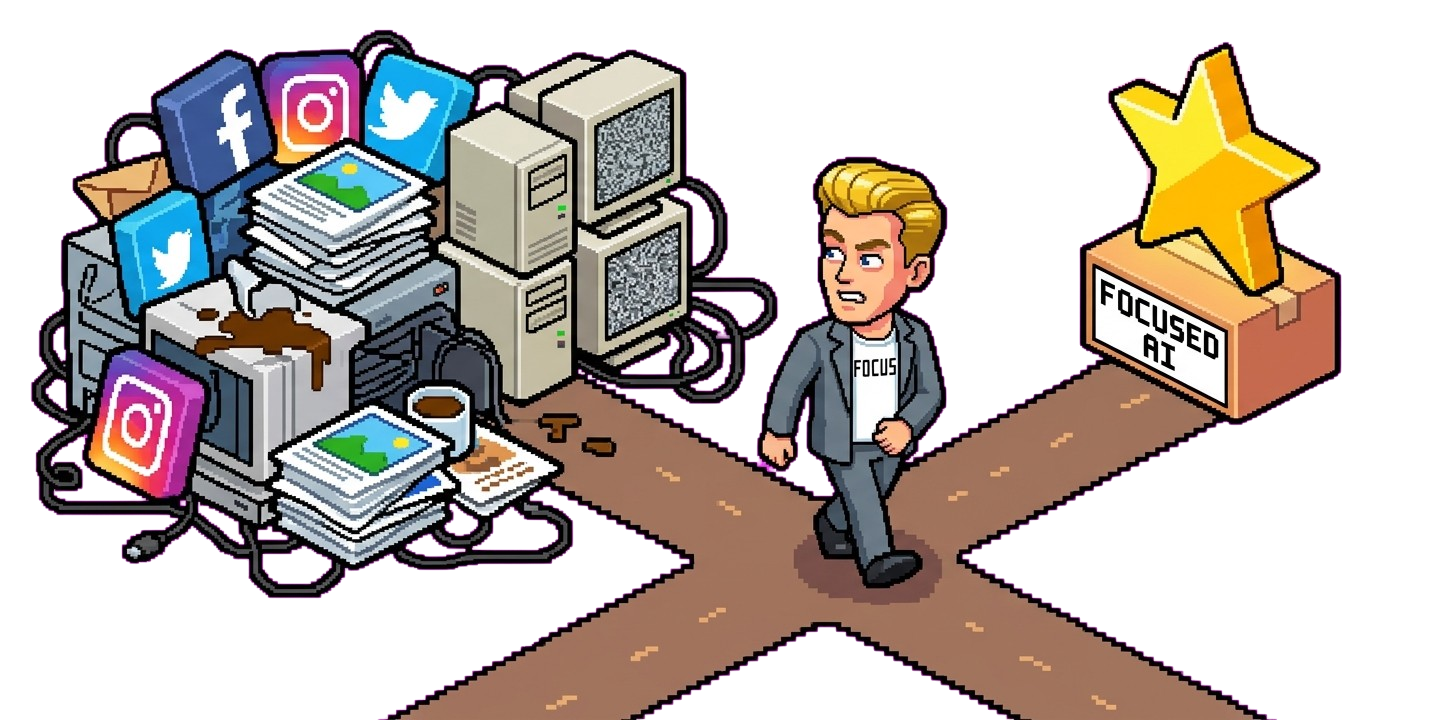
Not chatbots. Not “ChatGPT with a personality.” Actual agents that go off and do work.
The top trending YouTube video on AI this week isn’t a model comparison or a technical deep-dive. It’s called “How to Build AI Agents in 2026 (no coding).” On Hacker News, six different agent-building tools cracked 70 points in a single day. Pickaxe. Inkeep. Cua. Human Layer - a human-in-the-loop API - hit 354 points. That’s not curiosity traffic. That’s builders looking for production tooling.
If you’re still thinking of AI as “a thing that answers questions,” you’re a year behind. The conversation has moved. Agents browse the web. Agents control software. Agents manage workflows with a human checking in, not a human driving every click.
2025 was about playing with AI. 2026 is about deploying it.
2. MCP Is Quietly Becoming the Standard
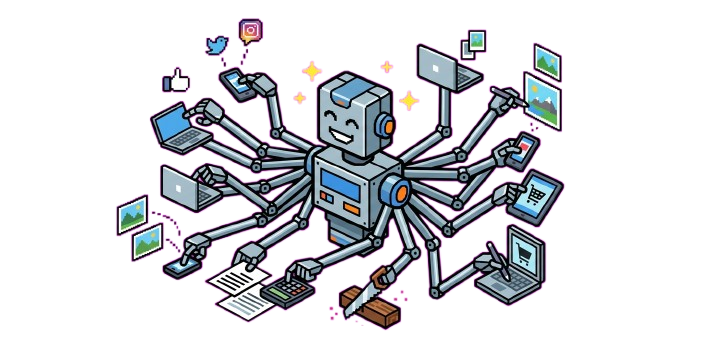
Model Context Protocol. Anthropic open-sourced it in late 2024. It’s the thing that lets AI agents connect to tools - your email, your files, your browser, your APIs - without custom code for every single integration.
Think of it like USB-C. Before MCP, every AI-tool connection was a custom build. Every agent platform had its own plugin system. If you switched from one framework to another, you rewrote everything. MCP fixes that. One integration works everywhere.
Hyperbrowser launched an MCP server this week on HN. The significance isn’t the browser tool itself. It’s that “MCP server” is now a product category. Companies are building things specifically to be plugged into agents via MCP.
If you’re building AI products or automations, learning MCP now is like learning HTTP in 1995. The tutorials aren’t saturated yet. The templates don’t exist yet. That’s the window.
3. Computer-Use Agents Are Going Open-Source
Six months ago, “computer use” meant one thing: Claude’s proprietary feature. You’d send screenshots to their API, Claude would figure out what to click, and you’d pay per action. Cool technology. Expensive. Locked in.
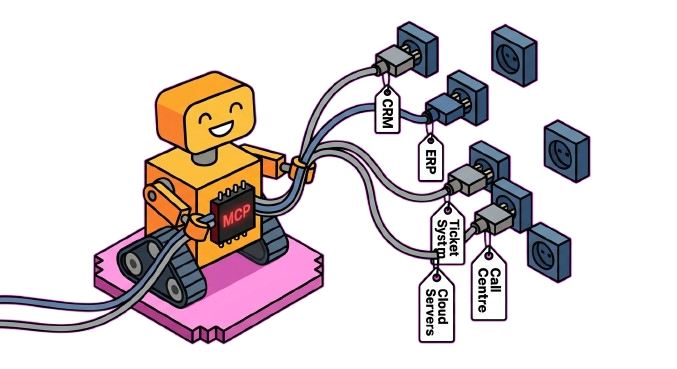
Now there are open-source alternatives. Cua - a YC startup - launched an open-source Docker container for computer-use agents. 172 points on HN. BrowserOS, a “Claude Cowork” concept that runs in the browser, hit 88. The pattern is obvious: the expensive proprietary feature is getting commoditized by open source, fast.
What this actually means for you: agents that fill forms. Agents that scrape data from visual interfaces. Agents that can automate legacy software that has no API. This isn’t just for developers anymore. The YouTube trends show no-code builders are already packaging this for non-technical users.
I remember watching a demo last month where someone pointed an agent at a 15-year-old internal tool - no API, no documentation, just a web interface - and the agent navigated it, extracted the data, and dropped it into a spreadsheet. That used to be a “someday” project. Now it’s an afternoon.
4. LLM Observability Is the New APM
Remember when Datadog and New Relic became billion-dollar companies? The pitch was simple: you need to watch your production software. If it breaks and nobody knows, you’re in trouble.
The same thing is happening for AI right now. Laminar - pitched as “open-source DataDog + PostHog for LLM apps” - hit 203 points on HN this week. Companies that were experimenting with AI six months ago are now depending on it. And depending on AI means you need to know when it hallucinates, when it gets expensive, and when it’s quietly producing garbage that nobody’s checking.
Here’s a real scenario I’ve seen twice now. A SaaS company adds an AI feature. It works great in testing. They ship it. Three months later, costs have tripled because the prompts got longer without anyone noticing, and 15% of the outputs are subtly wrong but nobody’s tracking it. The AI feature that was supposed to be a competitive advantage is now a cost centre with a quality problem.
Observability catches that before it becomes a board-level conversation. The tools are still early. That makes this a good time to build expertise. Every SaaS product adding AI features - which is basically every SaaS product - will need this within 18 months.
5. The No-Code AI Wave Is Real (and Underserved)
The top YouTube trend I mentioned earlier isn’t for developers. It’s a step-by-step guide on building AI agents without writing a single line of code. The video covers Zapier vs n8n comparisons, common pitfalls, and builds you can follow along with.
Here’s who this is for: the business owner who knows their industry cold but doesn’t know Python. The marketing director who can map out a workflow on a whiteboard but can’t code it. The operations manager who’s been doing the same repetitive process for three years and would love to hand it off to something - if only they knew how.
This audience is massive and almost nobody is writing for them properly. The technical crowd has docs and GitHub repos. The “I run a business and want AI to handle the boring stuff” crowd gets jargon and assumptions. Fill that gap and you’ve got something.
What’s driving it: MCP makes integrations plug-and-play. Visual agent builders are maturing. And the templates - the pre-built workflows someone can buy and adapt - are becoming products themselves.
6. Open-Source AI Assistants Are Having a Moment
AnythingLLM - an open-source, all-in-one desktop AI assistant - hit 368 points on HN. That was the top AI story of the week by a wide margin. Sourcebot, a self-hosted alternative to Perplexity for searching your own codebase, hit 103.
The message is clear. People want ChatGPT-level capability they can run themselves. On their own machine. With their own data. Without a monthly subscription that goes up every quarter.
I don’t think this kills SaaS. But it changes the game. Your AI feature that costs $20/user/month now has an open-source competitor that costs zero. The moat isn’t the feature. It’s the integration, the UX, the support, the domain knowledge baked in. If your only advantage is “we have AI,” you’re in trouble. If your advantage is “we understand this industry better than anyone and the AI makes us faster,” you’re fine.
What I’d Ignore
The AGI timelines. The model comparison threads. The funding announcements. The Elon vs Sam drama. The “this changes everything” takes that change nothing.
None of that helps you build a business. None of it helps you decide what to learn, what to build, or where to put your time. It’s entertainment dressed up as insight.
The six trends above are where work is actually getting done. Actual products are shipping. Actual money is moving. Everything else is just noise.
The question: Which of these six actually matters for what you’re building right now? Because that’s the real filter. Not what’s trending. Not what’s getting funded. What’s relevant to you. Pick one. Go deep. Ignore the rest.